

How Collagen Supports Bone Health
Most people know collagen is excellent for skin, muscles, and connective tissues. But what’s less well-known is that collagen is essential for healthy bones.
Collagen acts like a structural framework inside your bones, giving them shape, flexibility, and strength. It helps bones absorb everyday stress and reduces the risk of fractures.
As we age, the body naturally produces less collagen, which can contribute to weaker bones. This is why collagen intake becomes especially important after the age of 40.
How Collagen Supports Bone Structure
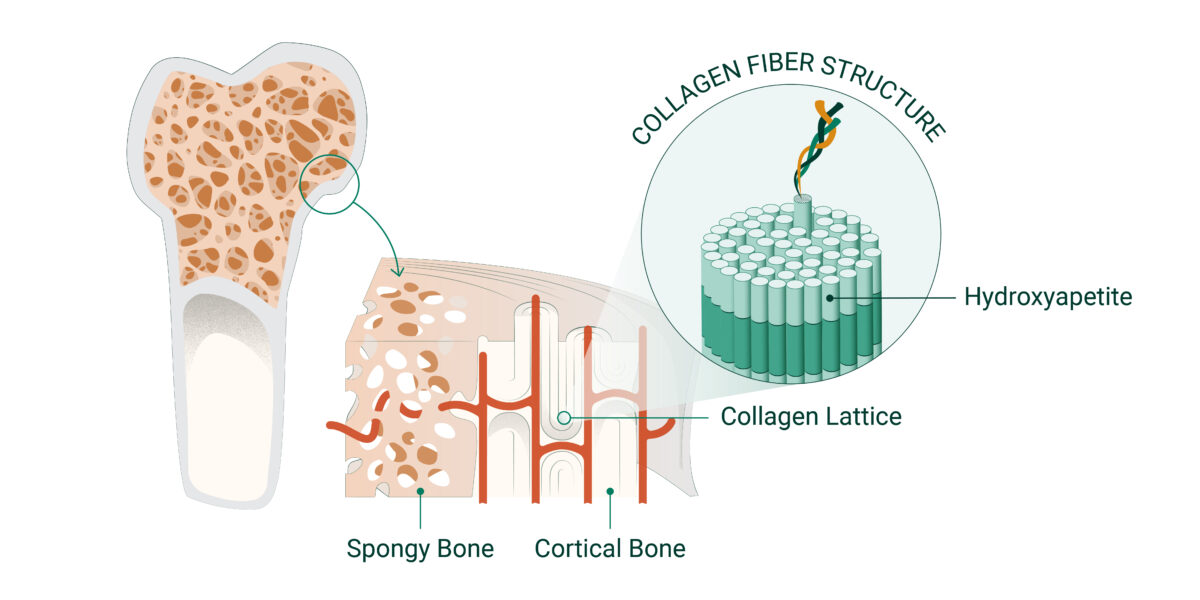
At the core of your bones is a dense network of collagen fibers. This network acts like a scaffold that provides shape and flexibility.
Once this scaffold is formed, minerals like calcium and phosphate (as hydroxyapatite) deposit into the structure, creating hard, strong bone.
Collagen is therefore the foundation of bone structure. Healthy collagen levels are essential for maintaining bone mineral density.
Beyond structure, collagen also plays a role in bone formation by supporting osteoblasts—the cells responsible for building new bone tissue.

Collagen and Osteoporosis Prevention
Osteoporosis occurs when bone breakdown happens faster than bone formation, leading to fragile bones over time.
Research suggests collagen supplementation may help slow this process.
In one study, 131 postmenopausal women took 5g of collagen daily for 12 months. Results showed improved bone mineral density in the femoral neck (hip region) and increased markers of bone formation.
A follow-up study found that continued collagen supplementation helped slow bone loss over time, and participants who continued supplementation reported no fractures during the study period.
Another study compared:
- Calcium + Vitamin D
- Calcium + Vitamin D + Collagen
The group taking collagen showed better preservation of bone mineral density and reduced markers of bone breakdown.
Collagen and Exercise Benefits
Collagen also supports muscle strength, which indirectly benefits bone health.
When you perform weight-bearing or resistance exercises, your muscles apply force to your bones. This stimulates bones to become stronger.
Stronger muscles supported by collagen can generate more force, which enhances this bone-strengthening effect.
Studies show collagen supplementation may:
- Increase muscle mass
- Improve muscle strength
- Support recovery in older adults
- Help individuals with muscle loss regain strength
This creates a positive cycle where stronger muscles support stronger bones.
Natural Sources of Collagen

You can support collagen levels through diet, including:
- Bone broth
- Fish (especially skin, such as salmon)
- Chicken (skin and connective tissues)
- Egg whites (provide amino acids that support collagen production)
However, dietary intake alone may not always be sufficient. Many people choose supplementation to maintain consistent collagen levels.
How to Take Collagen
Collagen supplements are typically taken daily and come in powder form.
They can be mixed into:
- Water
- Smoothies
- Coffee or tea (not extremely hot)
- Yogurt
- Oatmeal
- Soups or applesauce
Collagen can be taken at any time of day. The most important factor is consistency.
It does not need to be taken at the same time as calcium, but adequate calcium intake is still essential for bone health.
Key Takeaway
Collagen is a key structural protein that supports bone flexibility and strength. It works alongside minerals like calcium to maintain healthy bone density.
As collagen levels decline with age, supplementing it may help support:
- Bone strength
- Muscle function
- Joint health
- Overall connective tissue integrity
However, optimal bone health requires both:
- Collagen (for structure and flexibility)
- Minerals and vitamins (for hardness and density)
Together, they support a stronger, more resilient skeletal system.